Stay and work
The international community in Brindisi: how to plug in for a longer stay
Quick answer
Brindisi has a small but real international community, mostly built around the two UN logistics bases at the airport (the UN Global Service Centre and the WFP-run Humanitarian Response Depot), plus university students, aerospace workers, remote workers and foreigners married into local families. People meet through clubs such as Rotary and Lions, the Dante Alighieri committee, Italian courses and informal meetups in the old town.
| Main international employer | The United Nations, at Brindisi's military airport since 1994 |
|---|---|
| UN entities | UN Global Service Centre (UNGSC) and UNHRD, managed by WFP |
| University | Università del Salento, with a Master's in international cooperation in Brindisi |
| International school | QSI International School of Brindisi, preschool to secondary |
| Erasmus network | ESN Lecce, about 30 minutes away by train |
| Italian courses | CPIA Brindisi (public) and private schools and tutors |
Is there an international community in Brindisi?
On a weekday evening in the old town you can hear it if you listen: a table speaking French outside a bar in Piazza Vittoria, two young women switching from English to Italian on the waterfront, a man in a UN lanyard buying bread on his way home. Brindisi is a port and an airport city, and it has always had people passing through. Some of them stay.
It is not Lisbon or Barcelona. There is no large expat district and no English-language newspaper. What Brindisi has is a compact community of internationals who know each other, a city that is used to foreigners because of the United Nations, and locals who are curious and quick to invite you to dinner once you say more than "buongiorno".
This guide explains who the internationals are, where they meet, which organisations exist (each one checked online at the time of writing) and how to settle in for a month or a season. If you are here for the UN specifically, read our separate guide on staying in Brindisi for work at the UN bases.
Who are the internationals living in Brindisi?
Roughly, five groups make up the international side of the city:
- UN staff, consultants and trainees. The United Nations Logistics Base arrived in 1994 and is now the UN Global Service Centre (UNGSC). The UN Humanitarian Response Depot (UNHRD), managed by the World Food Programme, opened here in 2000. Both sit at the military airport next to the civilian terminal, and they bring permanent staff, rotating mission personnel and people on training courses.
- Students and academics. The Università del Salento is based in Lecce, but it runs courses in Brindisi too, including a Master's degree in international cooperation designed around the UN presence.
- Industry. Brindisi has an aerospace and energy industry around the port and the industrial zone, which brings engineers and technicians, some from abroad.
- Remote workers and long-stay visitors. People who came for a holiday in Puglia and wanted a calmer, cheaper city with an airport ten minutes away. See our remote work guide.
- Foreigners with Italian families. Plenty of Irish, British, German, Dutch and Scandinavian partners of people from Brindisi and the villages around Ostuni.
The mix matters. It means that many locals in offices, shops and restaurants near the centre speak at least some English, and that a newcomer is not a novelty. It also means the community is spread out rather than concentrated in one bar, so you find it through activities, not addresses.
Why the United Nations shapes international life in Brindisi
Most cities of 80,000 people in southern Italy have very few foreign professionals. Brindisi is different because of the UN. The UNGSC provides logistics, geospatial, IT and training services to peacekeeping and political missions worldwide, and works together with a sister base in Valencia, Spain. The UNHRD network, run by WFP, stores and ships emergency supplies for UN agencies, governments and NGOs; Brindisi was its first hub and still hosts warehouses, a training centre and a guesthouse.
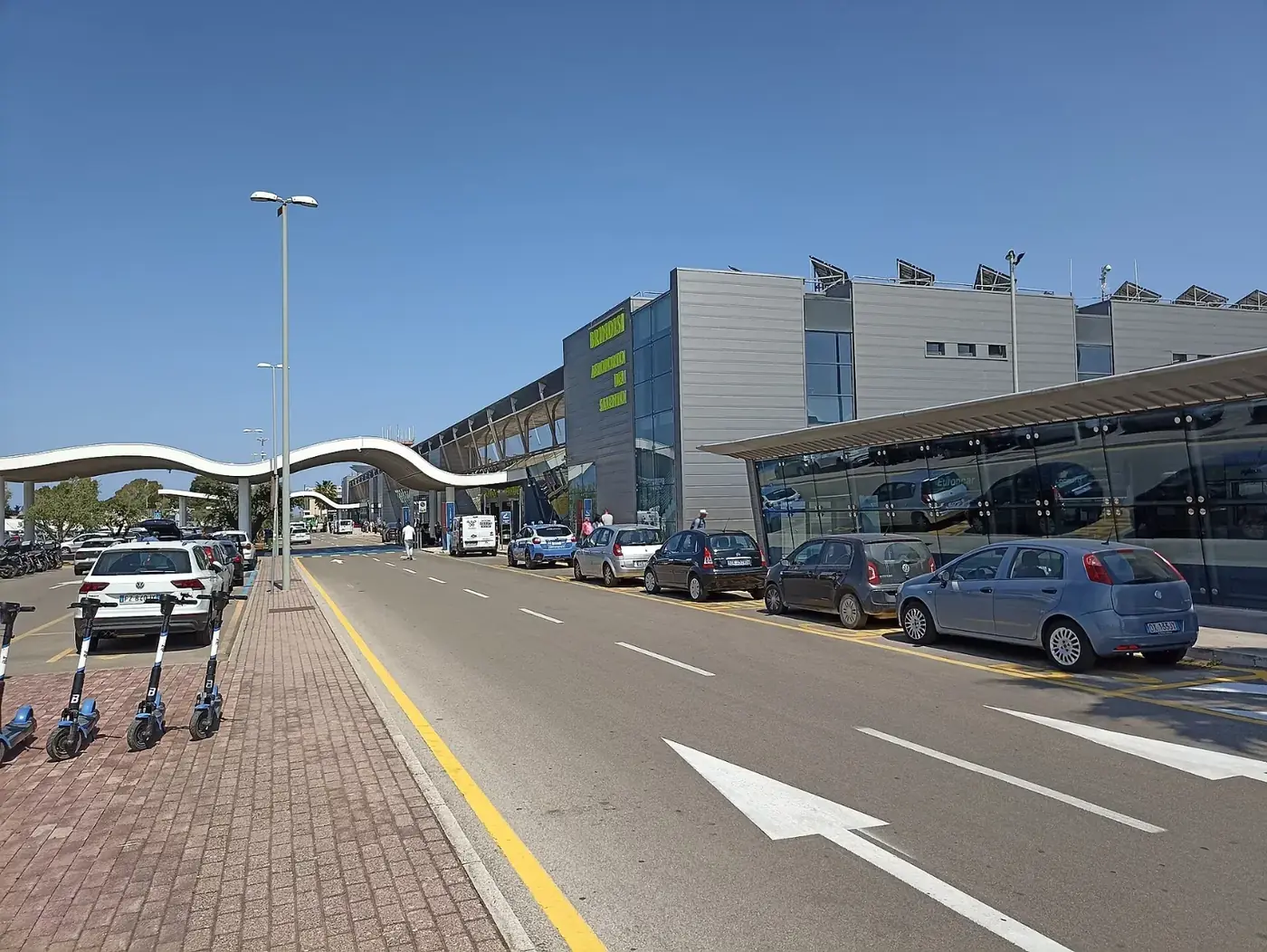
For a newcomer this has practical effects. Landlords and hosts are used to long stays and monthly arrangements. Some restaurants and cafés have English menus or staff used to explaining dishes. And there is a steady flow of courses and conferences, so people arrive and leave all the time, which keeps the social circle open.
The bases are not open to the public, and you need an invitation and a passport at security to get in. Social life happens outside, in the old town, at the beaches north of the city and at home dinners.
University, Erasmus and student life
The Università del Salento (Unisalento) has its main campus in Lecce. In 2021 it presented a Master's degree in Scienze della cooperazione internazionale (international cooperation) based at Palazzo Nervegna in the centre of Brindisi, with tracks in development cooperation and in humanitarian support and peace-building. The idea, stated openly at launch, was to build on the presence of the UNGSC and UNHRD. Teaching started in Italian, with plans for English-language parts, so check the current course page before you enrol.
Erasmus and international students in the area usually connect through ESN Lecce, the local section of the Erasmus Student Network, which organises welcome events, trips and parties for Unisalento's exchange students. Lecce is about 25 to 35 minutes from Brindisi by regional train, so a student living in Brindisi can join without much effort. See our comparison of Brindisi and Lecce as a base if you are deciding where to live.
Students who live in Brindisi tend to like the same things long-stay visitors like: lower rents than Lecce, the sea within reach, and a station that connects to Lecce, Bari and the rest of Italy.
Clubs, associations and meetups you can join
Italian civic life runs on associations. They are the quickest route into local circles, and several of them in Brindisi welcome foreign members or guests. These are the ones we found active online; meeting times change, so contact them first.
| Organisation | What it is | Good for | How to find it |
|---|---|---|---|
| Rotary Club Brindisi and Rotary Club Brindisi Valesio | Two clubs in Rotary District 2120 (Puglia and Basilicata) | Professionals, service projects, talks | District 2120 website, club Facebook pages |
| Lions Club Brindisi | Local Lions service club | Charity events, networking | Club Facebook page |
| Società Dante Alighieri, Comitato di Brindisi | Local committee of the society that promotes Italian language and culture | Talks, cultural events, books | Committee Facebook page |
| Crossing Communities | Monthly meetup for internationals and locals, reported in 2022 at Nervegna Caffè Letterario | Meeting other newcomers | Ask at the café or on local news sites; check it is still running |
| ESN Lecce | Erasmus Student Network section | Students under about 30 | lecce.esn.it and Instagram |
Rotary and Lions clubs in Italy usually meet over dinner, often in Italian, and visiting members of other clubs can normally attend as guests if they contact the secretary first. The Dante Alighieri committee organises lectures and cultural events, a good way to practise listening to Italian on a topic you can follow.
For language exchange, the most reliable route is informal: post in local Facebook groups, use a tandem app, or ask at the university. Many young Brindisini want to practise English and will happily trade an hour of conversation.
Where to learn Italian in Brindisi
Three options cover most needs:
- CPIA Brindisi, the public adult-education centre, runs Italian language and literacy courses (AALI) for foreign adults. They follow the school year and are aimed mainly at residents, so ask about enrolment requirements.
- Private schools and tutors. Several schools and many freelance teachers offer one-to-one lessons, including online. Ask for a trial lesson before paying for a block.
- The street. Brindisi is a good place to learn because most people do not switch to English automatically. Markets, the bakery, the barber and the bar where you take your coffee every morning will teach you more than an app.
A useful tip: learn a few words of dialect. Locals light up when a foreigner says "ce ddici?" (what are you saying?) at the right moment.
Moving with children: schools and family life
The QSI International School of Brindisi, part of the Quality Schools International network, teaches in English from preschool through secondary and serves children of globally mobile families, including UN staff. Class sizes are small and places are limited, so contact the school well before you arrive.
Many international families also choose local Italian schools, especially for younger children, who usually pick up the language within months. Family life in Brindisi is outdoors for much of the year: the waterfront, the city park at Cillarese, the shallow beaches north of town. Our guide to Brindisi with kids has more.
How to plug in during your first month
Most newcomers say the first two weeks feel quiet and then, suddenly, they know half the old town. A simple plan helps:
- Pick one bar and one bakery and go every day. In southern Italy being a regular is the social contract.
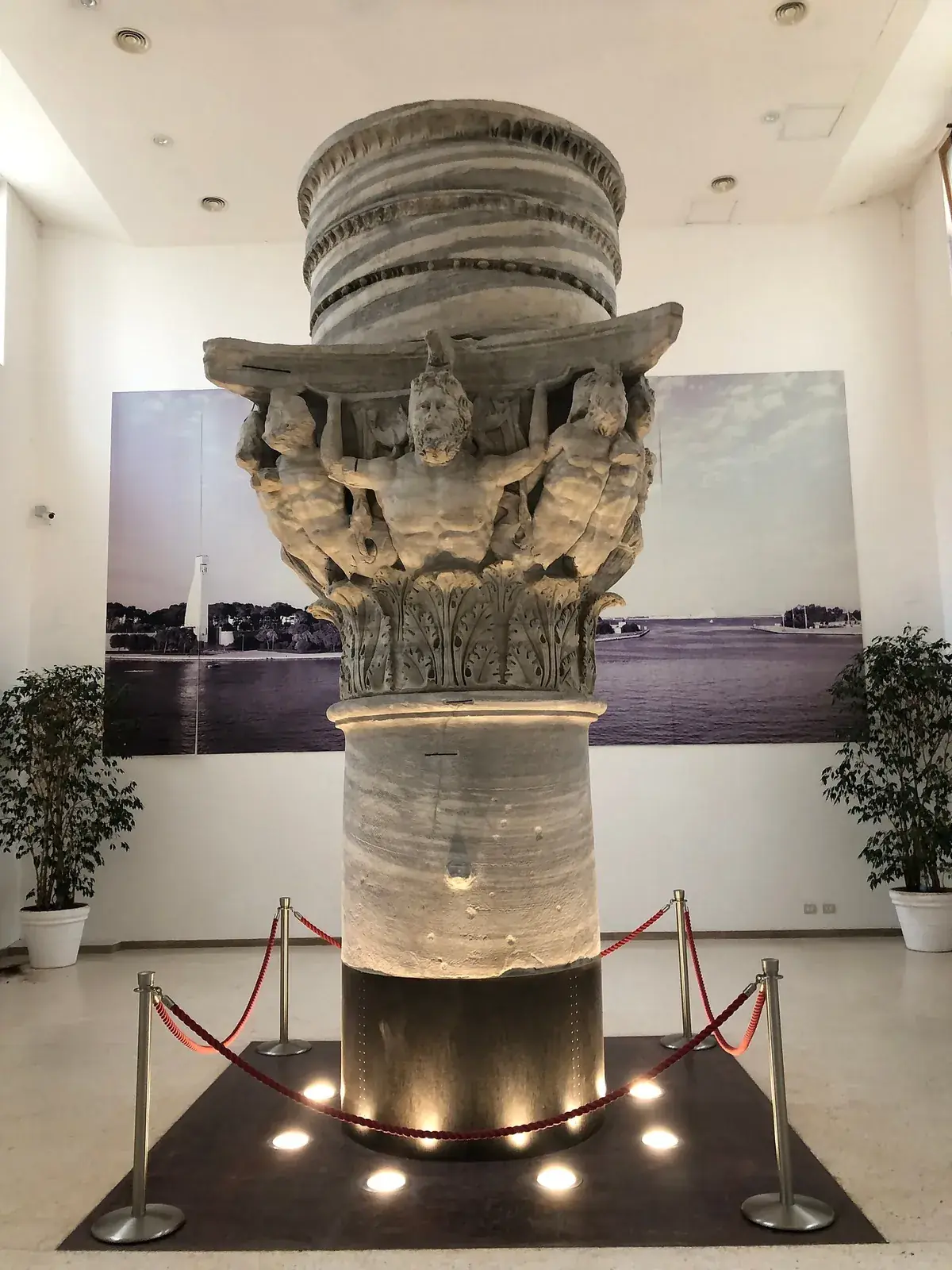
- Join the evening passeggiata along the waterfront between the Roman column and the harbour. Read our guide to evenings and aperitivo in Brindisi.
- Contact one association from the table above and one activity group: a gym, a sailing club, a running group, a choir, a volunteer organisation.
- Say yes to every invitation, from a baptism to a Sunday lunch in a masseria. That is where friendships start.
- Use the weekends for day trips from Brindisi to Ostuni, Lecce or the villages of the province, ideally with someone you met that week.
For anything official (a longer lease, a tax code, residency), ask a local accountant or the relevant office early, because rules depend on your nationality and the length of your stay.
A home base for a month: BDS House
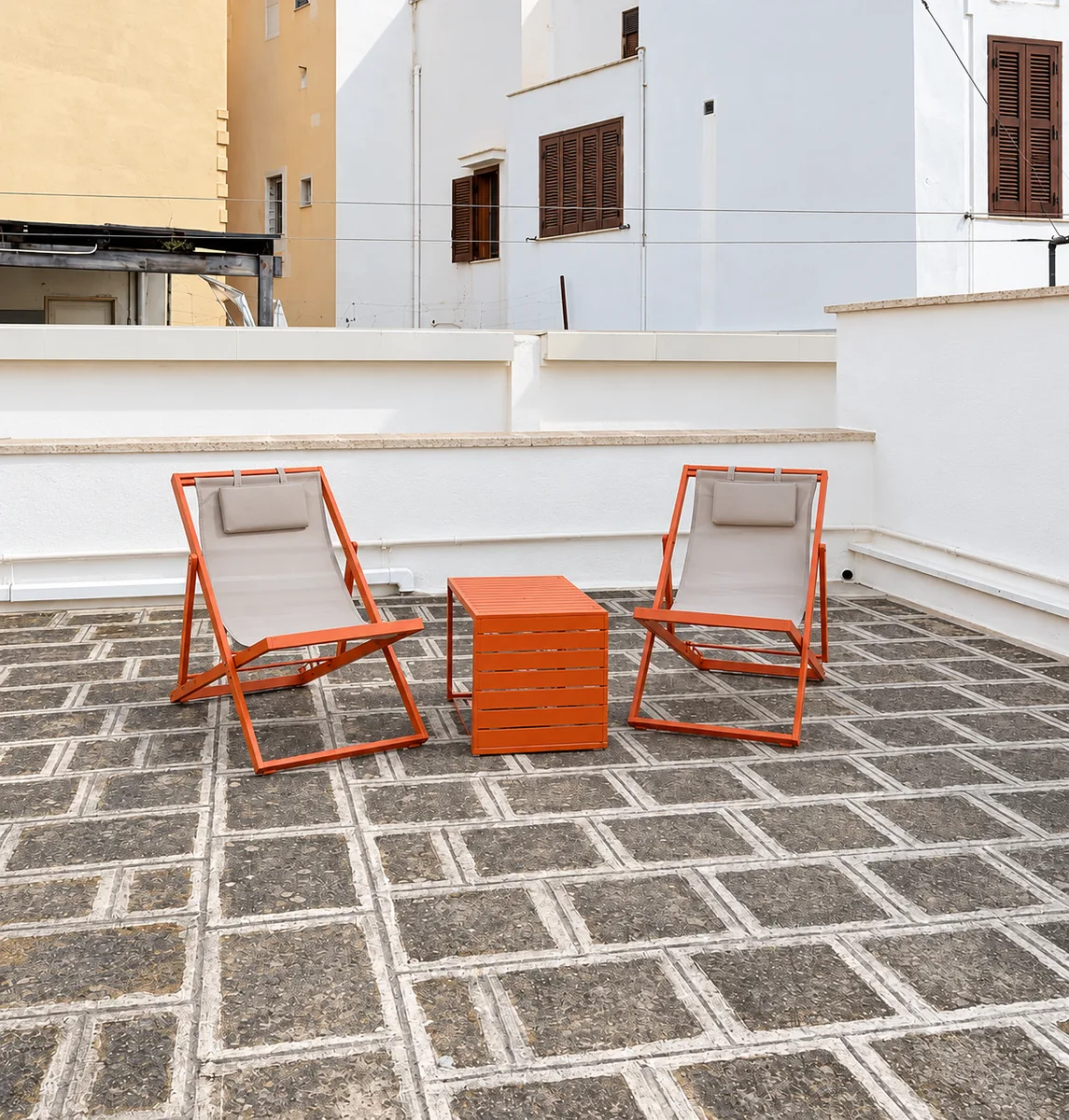
Many people test Brindisi with a stay of a few weeks before signing a lease. BDS House is our whole home in the old town, at Vico D'Orimini 11: it sleeps up to 6, has a full kitchen, a washing machine, air conditioning, two private terraces and a desk with a 27-inch monitor. The airport is about 10 minutes away and the station about 750 m on foot.
I am Niccolò, the host, and I am happy to point new arrivals towards the right people, from Italian teachers to the best Sunday market. Ask about monthly stays when you check availability.
Questions travellers ask
Are there many expats in Brindisi?
Not many compared with big cities, but more than in most southern Italian towns of its size. The core is the United Nations community at the airport bases, plus students, aerospace and industry workers, remote workers and foreigners married to locals. The community is small enough that people get to know each other quickly.
Is English spoken in Brindisi?
Some English is spoken in the centre, at hotels, many restaurants and among younger people, partly because the UN has been here since 1994. In markets, local shops and offices outside the centre, expect Italian. Learning basic Italian makes daily life far easier and opens doors socially.
Why is the United Nations in Brindisi?
The UN Logistics Base moved to Brindisi's military airport in 1994 and became the UN Global Service Centre, which supports peacekeeping and political missions. In 2000 the UN Humanitarian Response Depot, managed by the World Food Programme, opened its first hub here. The airport, port and Italian government support made the location practical.
Is there an international school in Brindisi?
Yes. The QSI International School of Brindisi teaches in English from preschool to secondary and serves internationally mobile families, including UN staff. Places are limited, so contact the school well before moving. Many families also use local Italian schools, especially for younger children.
Where can I learn Italian in Brindisi?
The public adult-education centre, CPIA Brindisi, runs Italian courses for foreign adults during the school year. Private schools and freelance tutors offer one-to-one and online lessons. The Dante Alighieri committee in Brindisi organises cultural events that are good listening practice once you have the basics.
Is there an Erasmus community in Brindisi?
Erasmus life in the area centres on Lecce, where the Università del Salento has its main campus and ESN Lecce organises events. Lecce is about 25 to 35 minutes by train from Brindisi, so students living in Brindisi can join easily while paying lower rents and living closer to the sea.
How can I meet people in Brindisi as a foreigner?
Become a regular at one bar and one bakery, join the evening passeggiata on the waterfront, contact a club such as Rotary, Lions or the Dante Alighieri committee, and join an activity group like a gym or sailing club. Saying yes to invitations is the fastest way in.
Is Brindisi a good place for a month-long stay?
Yes, especially if you want a real Italian city rather than a resort. It is calmer and usually cheaper than Lecce or the Valle d'Itria, has an airport about 10 minutes from the old town and a station on the main line, and the sea is close for evening swims for much of the year.
Sources and further reading
- United Nations Global Service Centre, Brindisi
- United Nations Humanitarian Response Depot (Wikipedia)
- ESN Lecce
- QSI International School of Brindisi
Times and prices are approximate and change by season. Last checked on 3 October 2026.