Brindisi
Brindisi's history in a walk: Messapians, Romans, crusaders and a royal capital
Quick answer
Brindisi began as a Messapian port named for its deer's-head harbour, became a Roman colony in the 3rd century BC and the end of the Via Appia, where Virgil died in 19 BC. It was a crusader port where Frederick II married in 1225 and sailed east in 1228, and from September 1943 to February 1944 it hosted Italy's king and government. Most of it fits in a 2-hour walk.
| Founded by | The Messapians, before the Romans |
|---|---|
| Name | From Messapic Brention, 'deer's head', the shape of the harbour |
| Roman colony | 3rd century BC; end of the Via Appia and later the Via Traiana |
| Virgil | Died in Brindisi in 19 BC |
| Frederick II | Married here on 9 November 1225; sailed on crusade in June 1228 |
| Royal seat | September 1943 to February 1944 |
| Walk length | About 3 km, 2 to 3 hours with visits |
Why does Brindisi have so much history?
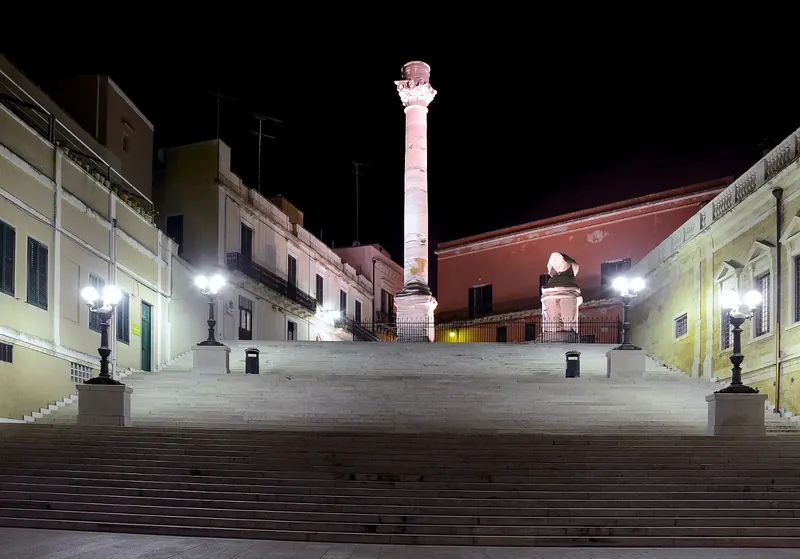
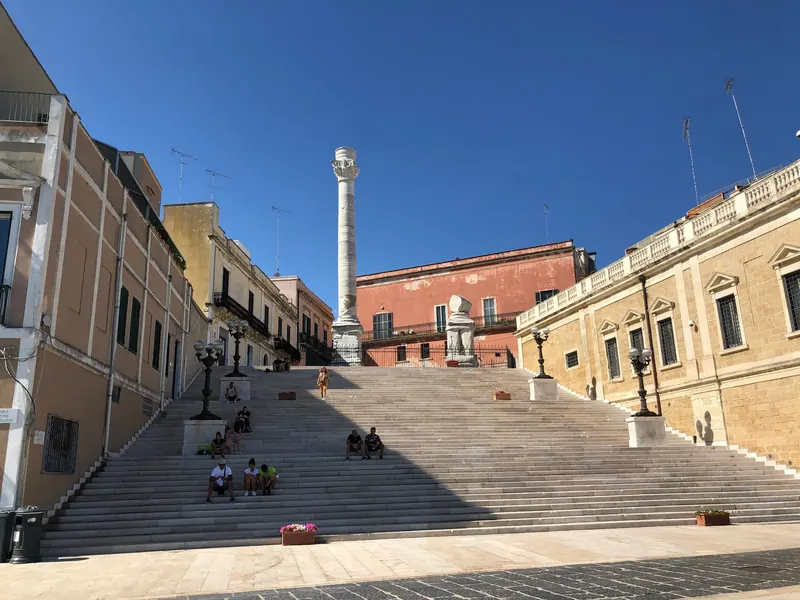
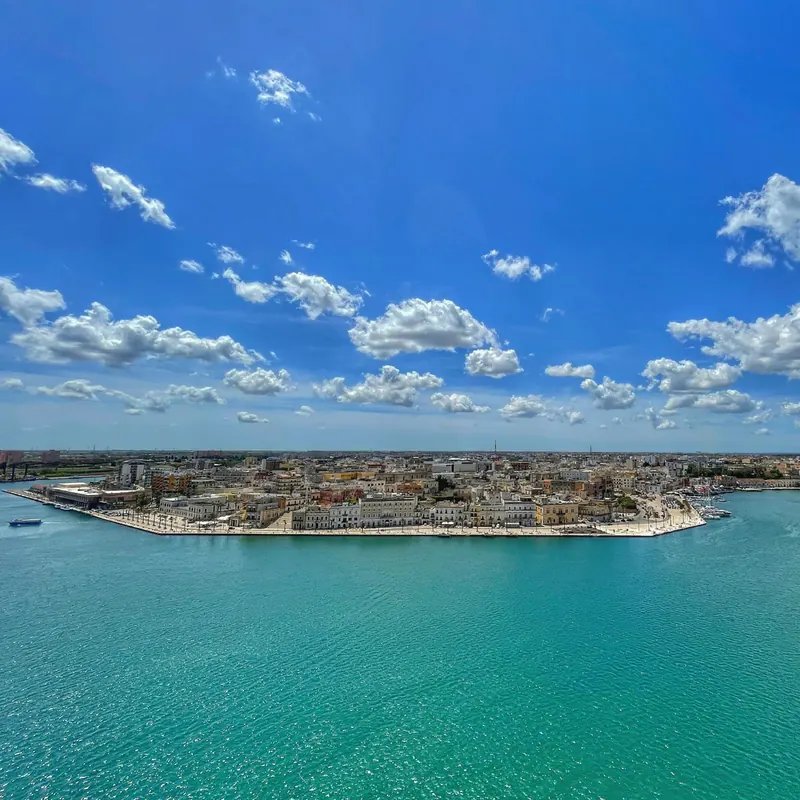
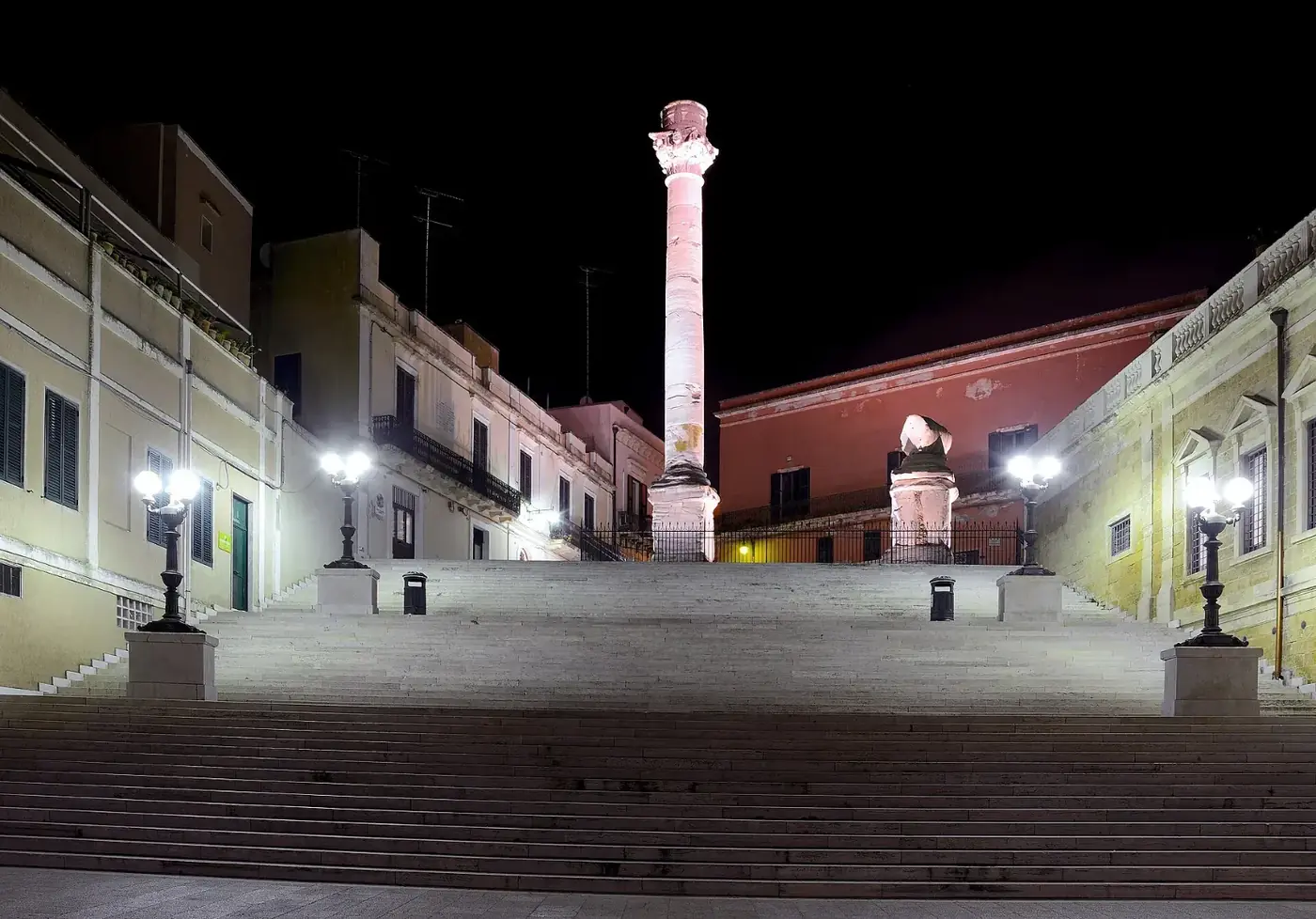
Stand at the top of the steps by the Roman column and look down. The harbour splits into two arms around the old town, like antlers. The first people who lived here saw the same thing and named the place after it: Brention, the deer's head, in the Messapian language. The Greeks said Brentesion, the Romans Brundisium, and we say Brindisi.
That harbour explains everything that follows. It is one of the best natural ports on the Adriatic, and it faces Greece and the East. For two and a half thousand years, whoever wanted to cross that sea came through here: Roman legions, poets, crusaders, emperors, pilgrims, soldiers, and today ferries and cruise ships. Each left something behind, and most of it sits within a short walk.
This guide follows that story in order, with the places where you can still see it. For the full list of sights, see things to do in Brindisi.
Brindisi through the centuries: a timeline
| Period | What happened | What you can see today |
|---|---|---|
| Before the 3rd century BC | Messapian port of Brention | Finds in the Museo Ribezzo |
| 3rd century BC to 5th century AD | Roman colony, end of the Via Appia, gateway to Greece | Roman column, San Pietro degli Schiavoni excavations, museum bronzes |
| 6th to 11th centuries | Byzantine rule, destruction by the Lombards in 674, rebuilding | Traces in churches and walls |
| 11th to 13th centuries | Normans and crusades; Frederick II | San Giovanni al Sepolcro, San Benedetto, Castello Svevo, the portico in Piazza Duomo |
| 13th to 14th centuries | Angevin period | Santa Maria del Casale and its frescoes |
| 15th to 18th centuries | Aragonese defences, decline, earthquakes | Castello Alfonsino, the rebuilt cathedral |
| 19th century | Port revival after the Suez Canal | Waterfront palazzi |
| 1933 to 1944 | Sailor's monument; seat of king and government | Monumento al Marinaio, Castello Svevo from outside |
Messapians and Romans: where does the Via Appia end?
The Messapians were the people of the Salento before Rome. The Romans took the city in the 3rd century BC and made it a colony, and soon it was the empire's door to the East. The Via Appia, the "queen of roads", ran from Rome to Brindisi, and later the Via Traiana, opened under Emperor Trajan, gave a faster route through Puglia to the same harbour.
Big moments of Roman history happened here. In 49 BC Julius Caesar besieged Pompey in Brundisium before Pompey escaped by sea to Greece. In 40 BC the Treaty of Brundisium divided the Roman world between Octavian and Mark Antony. And in 19 BC the poet Virgil, author of the Aeneid, died here on his way back from Greece.
What to see: the Roman column at the top of the Scalinata Virgilio, the steps named after the poet. Its original marble capital is indoors in Palazzo Granafei-Nervegna. Under the Nuovo Teatro Verdi, the excavations of San Pietro degli Schiavoni show Roman streets and houses; access has been closed at times, so check before you go. The Via Appia and Via Francigena guide covers walkers who still finish here.
The bronzes from the sea: the Museo Ribezzo
In 1992 divers found hundreds of bronze fragments on the seabed at Punta del Serrone, just north of the city: pieces of Greek and Roman statues, probably from a ship that sank or dumped its cargo. Some of the best are in the Museo Archeologico Provinciale Francesco Ribezzo in Piazza Duomo.
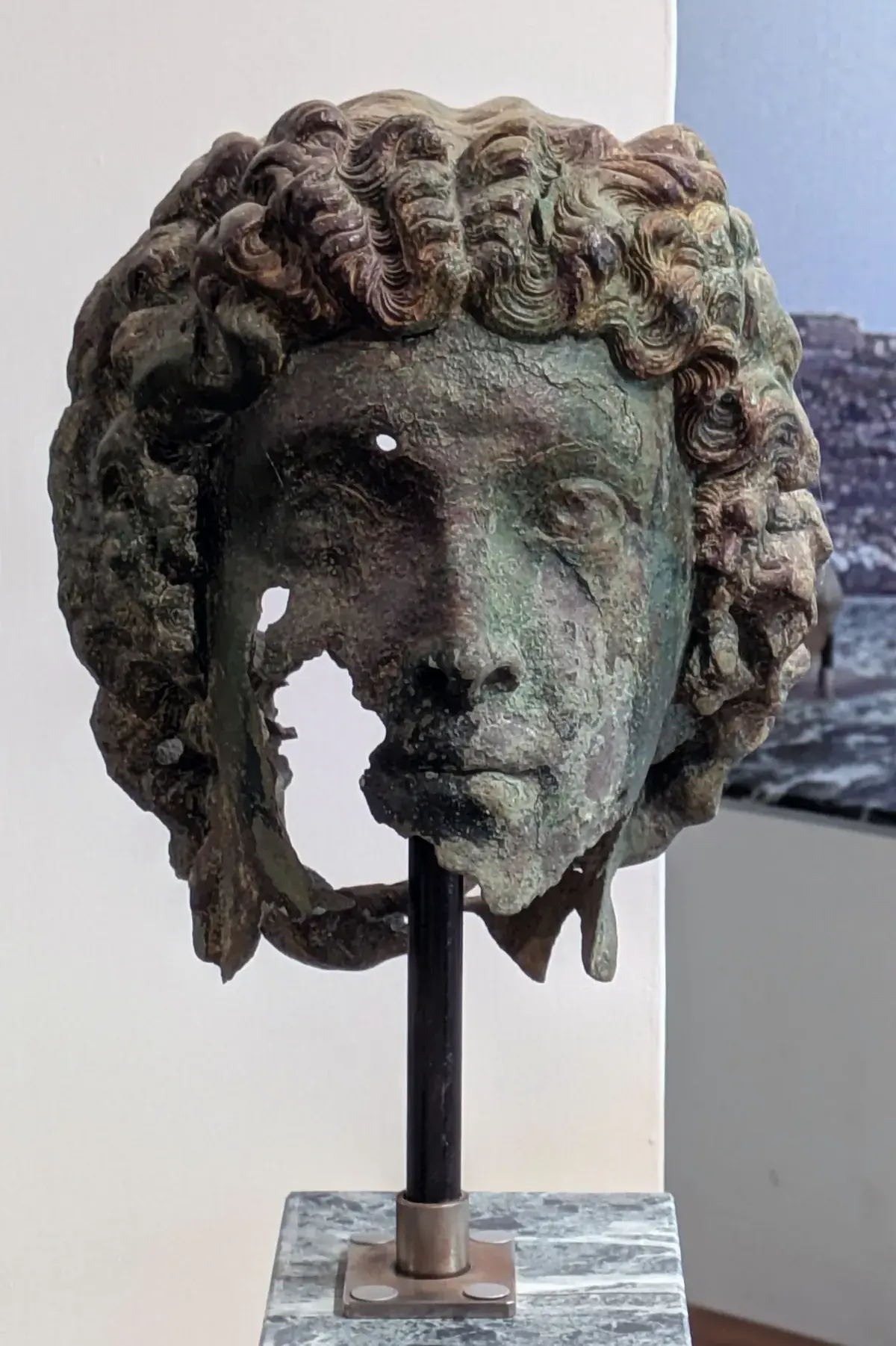
The heads are the reason to go. Faces two thousand years old, with wrinkles and tired eyes, look back at you from the cases. The museum also holds Messapian pottery, inscriptions and finds from the Roman city. Allow an hour, and check opening hours on the day.
Crusaders and Templars: the medieval port
After the Romans came Byzantines, Lombards (who destroyed the city in 674) and, in 1070, the Normans. Brindisi became one of the main ports for the crusades: knights, pilgrims and supplies left from here for the Holy Land, and religious military orders kept houses in the city.
Three buildings tell this story:
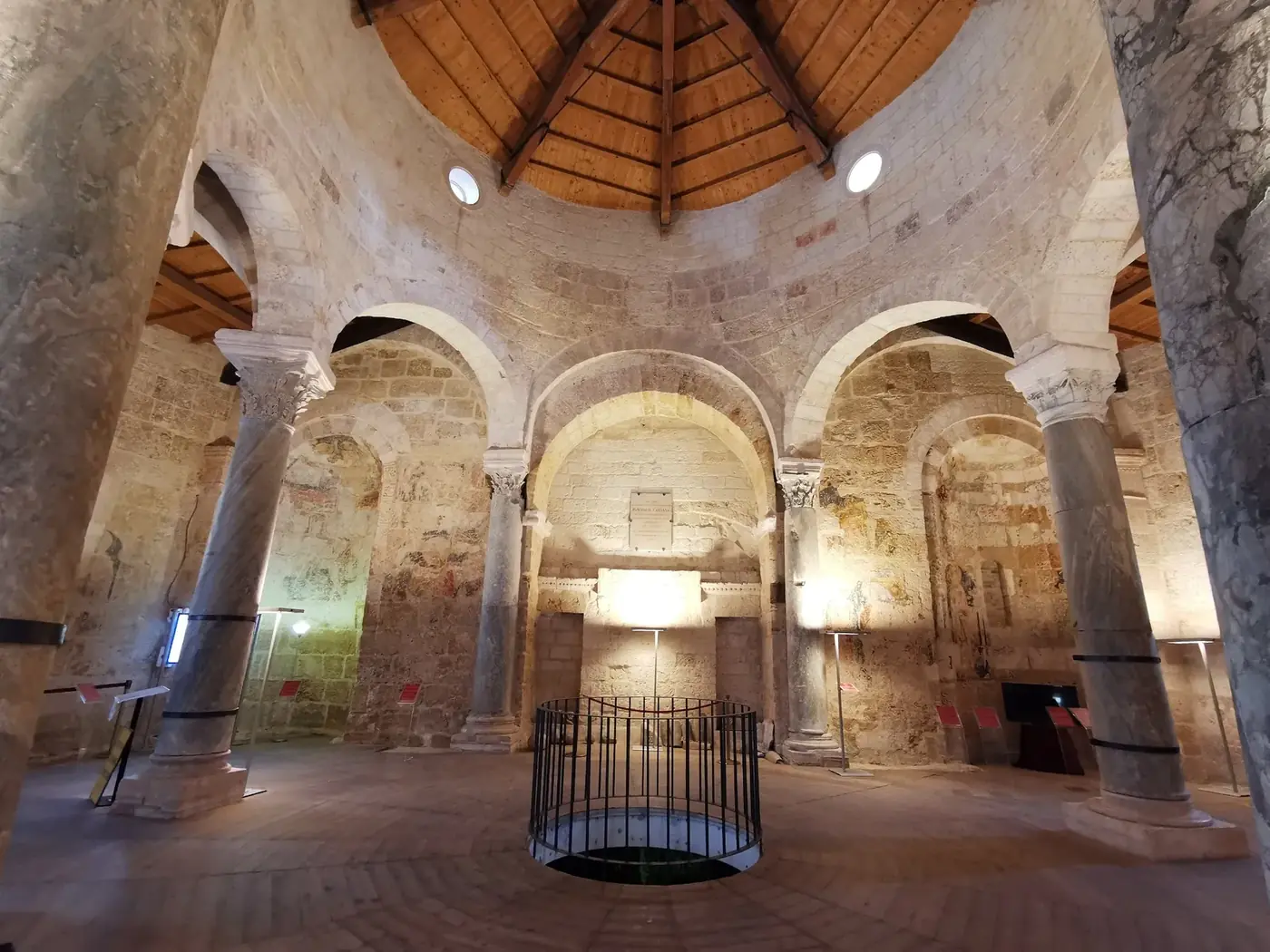
- San Giovanni al Sepolcro: an 11th-century round church built on the model of the Holy Sepulchre in Jerusalem. Small, dark and very old.
- San Benedetto: Romanesque, with carved animals on the side portal and a quiet cloister.
- The portico in Piazza Duomo, known as the Portico dei Cavalieri Templari. A nice story, but historians say the Templar link was invented by 18th-century scholars; the building is medieval, probably part of the early archbishop's palace. Enjoy the arches anyway.
Frederick II and the Castello Svevo
Emperor Frederick II, the Swabian king who loved Puglia, made Brindisi one of his key ports. On 9 November 1225 he married Isabella (also called Yolanda) of Brienne, heir to the crown of Jerusalem, in Brindisi cathedral. He built the Castello Svevo on the western arm of the harbour, with massive square towers.
In 1227 he gathered an army here for a crusade, but an epidemic broke out and he turned back ill, which cost him excommunication. On 28 June 1228 he sailed again from near the island of Sant'Andrea, reached Acre and won Jerusalem by treaty rather than war. He came back to Brindisi in 1229.
The castle still belongs to the Italian Navy and opens only on special occasions, but you can see its walls from the water and the waterfront. Later, the Aragonese defended the harbour mouth with the Castello Alfonsino, begun in 1481 on the island of Sant'Andrea and reopened for visits and events in recent years.
One more medieval stop, near the airport: Santa Maria del Casale, with a two-colour stone facade and a large cycle of 14th-century frescoes, including a Last Judgement. Combine it with your flight.
Brindisi in the 20th century: the sailor's monument and the royal capital
The 19th century brought the port back to life after the Suez Canal opened, when mail and passengers to India passed through Brindisi. The 20th century brought two wars.
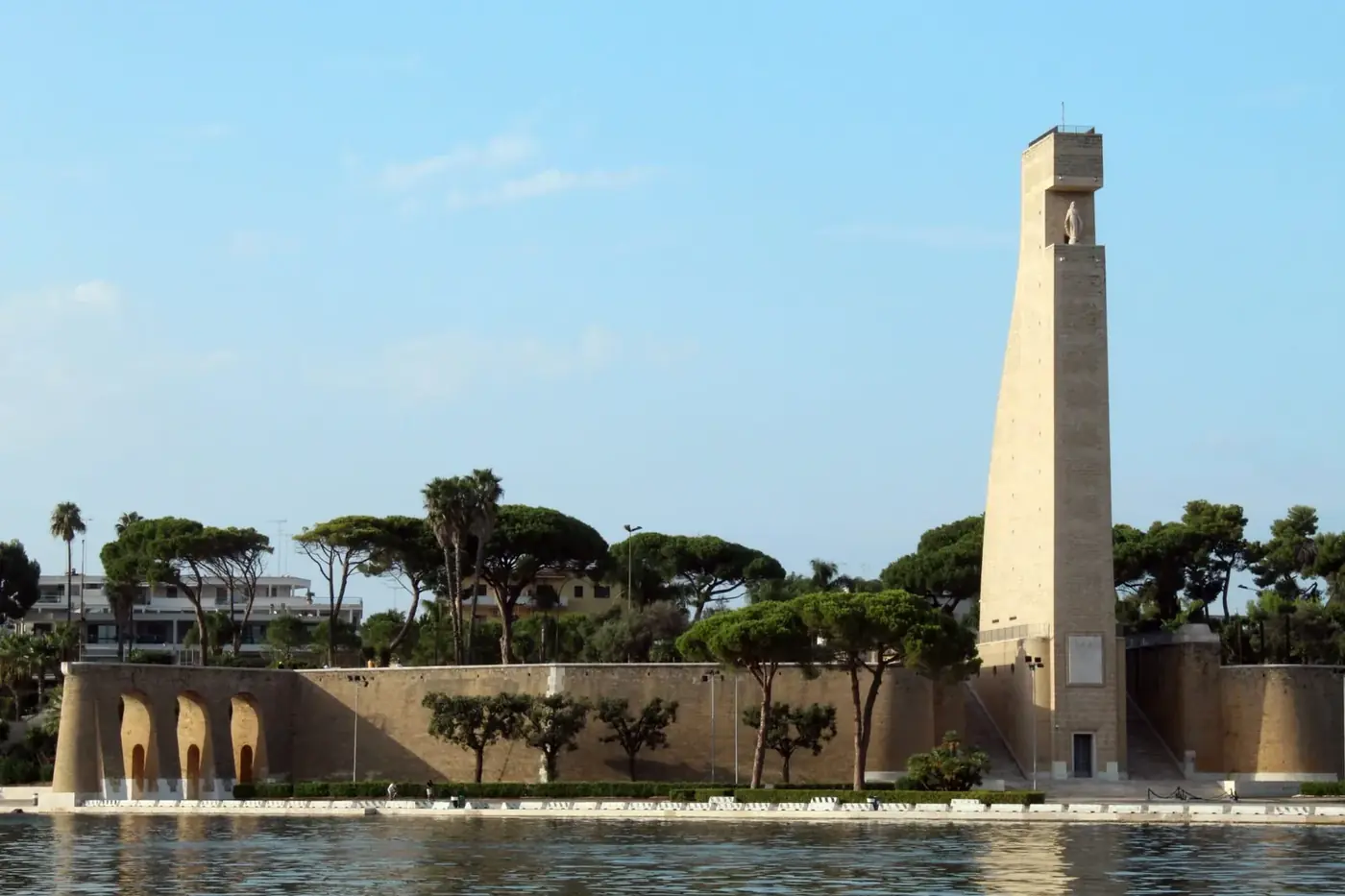
The Monumento al Marinaio d'Italia, shaped like a ship's rudder, was inaugurated on 4 November 1933 to honour Italian sailors who died at sea. Its crypt lists their names. Take the small boat across the harbour to reach it.
Then came September 1943. After the armistice, King Victor Emmanuel III and the government left Rome and arrived in Brindisi on 10 September 1943. For five months the city was the seat of the Kingdom of the South: the king was lodged in the Admiralty building within the Castello Svevo area, and decrees were printed in the city. The government moved to Salerno in February 1944. Brindisi was never officially named capital, but locals still call it "Brindisi capitale".
A history walk through Brindisi: the route
About 3 km, 2 to 3 hours with stops. Start in the morning, when churches and the museum are more likely open.
- Roman column and Scalinata Virgilio (Rome, Virgil).
- Palazzo Granafei-Nervegna for the column's original capital.
- Piazza Duomo: the cathedral (rebuilt in the 18th century), the portico and the Museo Ribezzo.
- San Giovanni al Sepolcro and San Benedetto (crusaders).
- San Pietro degli Schiavoni under the Teatro Verdi, if open.
- Walk to the western harbour to see the Castello Svevo walls.
- Back to the waterfront and the boat to the Monumento al Marinaio for sunset.
Want a local guide? Cultural associations in the city organise themed history walks in season; ask at the tourist information office or ask us for current contacts.
Where to stay to explore Brindisi's history
Stay inside the old town and history is outside your door. BDS House is a whole home in a lane of the historic centre for up to six people, a few minutes on foot from Piazza Duomo, the column and the waterfront, with two private terraces to finish the day over the roofs. The airport is about 10 minutes away, so a history walk fits even a short stopover; see our 24 to 48 hour stopover guide.
Questions travellers ask
Where does the Via Appia end?
In Brindisi. Tradition places the end of the Via Appia at the Roman column at the top of the Scalinata Virgilio, above the inner harbour. From here Roman travellers took ship for Greece and the East. One column still stands; most of the second was given to Lecce in the 17th century.
Did Virgil die in Brindisi?
Yes. The Roman poet Virgil, author of the Aeneid, died in Brindisi in 19 BC on his way back from Greece. The steps beside the Roman column are named Scalinata Virgilio after him, and tradition places his death in a house near the top of the steps.
Was Brindisi ever the capital of Italy?
In practice, for a few months. After the armistice of September 1943, King Victor Emmanuel III and the government arrived in Brindisi on 10 September 1943 and stayed until February 1944, when they moved to Salerno. The city was never officially named capital, but it was the seat of the king and government.
What does the name Brindisi mean?
It comes from the Messapian word Brention, meaning deer's head. The two arms of the inner harbour around the old town look like antlers. The Greeks called the city Brentesion and the Romans Brundisium, which became Brindisi.
Is the Templars' portico in Brindisi really Templar?
Probably not. The arcade in Piazza Duomo is medieval, from around the 12th or 13th century, but historians say the Templar link was an 18th-century scholarly invention. It was more likely part of the early archbishop's palace. The name stuck, and it is still a beautiful building.
Can you visit the Castello Svevo in Brindisi?
Only on special occasions. The castle built by Frederick II still belongs to the Italian Navy, so regular visits are not possible. You can see its walls from the waterfront and from the boat across the harbour. The Castello Alfonsino at the harbour mouth has reopened for visits and events.
What did Frederick II do in Brindisi?
He married Isabella of Brienne, heir to the throne of Jerusalem, in Brindisi cathedral on 9 November 1225, built the Castello Svevo, and sailed from Brindisi on crusade on 28 June 1228. He won Jerusalem by treaty and returned to Brindisi in 1229.
How long does a history walk in Brindisi take?
About 2 to 3 hours for a route of roughly 3 km, including the Roman column, Piazza Duomo, the archaeology museum, the round church of San Giovanni al Sepolcro and the waterfront. Add the boat to the sailor's monument for a half day.
Sources and further reading
- Brindisi, Wikipedia
- Kingdom of the South, Wikipedia
- Brindisi capitale del Regno del Sud, Brindisiweb
- What to see in Brindisi, Visit Puglia
Times and prices are approximate and change by season. Last checked on 3 October 2026.